
+1 (704) 791 1455info@dto-research.com
Skills shortages in machinery and plant engineering

DTO · EN

Skills shortages in machinery and plant engineering

A study of the German labour market for engineers

This study examines the skills situation in machinery and plant engineering, with a particular focus on engineers. Skills shortages are mainly caused by gaps in education, demographic change and economic fluctuations. Their effects can be seen across the labour market as well as in companies’ ability to innovate, compete and act.

Comparing vacancies with engineers seeking work shows that the ratio has risen steadily in recent years. By contrast, engineers’ average wages fell last year while wages across the sector increased. More engineers are therefore needed, yet wage trends do not indicate a skills shortage. Various recruitment measures can provide a basis for securing the skilled workforce needed in the future.

Workers and skilled employees

Requirement level I: Support and basic tasks (helpers)

Helpers do not require specialist knowledge. They mainly carry out simple and supporting tasks. Usually, no or only limited formal qualifications are needed at this level. An example in mechanical engineering is a mechanical engineering assistant.

Requirement level II: Skilled tasks (skilled workers)

Skilled workers require sound technical knowledge and practical skills. Their tasks include manufacturing components for machinery and equipment. The formal qualification required is two to three years of vocational training or an equivalent qualification from a vocational school or college. Examples in mechanical engineering include precision mechanics specialising in machinery and mechanical engineering mechanics.

Requirement level III: Complex specialist tasks (specialists)

Specialists mainly perform more complex tasks requiring specific knowledge and skills. Examples include planning the deployment of equipment, maintaining production facilities, and quality inspection and assurance. These skills are usually acquired through further or continuing training. Formal qualifications include technician or master craftsperson training, or an equivalent technical college or university qualification. Professional experience and other informal vocational training may also qualify someone for these tasks. Examples in mechanical engineering include mechanical engineering technicians, maintenance technicians and mechanical engineering technical assistants.

Requirement level IV: Highly complex tasks (experts)

Highly complex tasks include development, research and diagnostic work, and, in mechanical engineering, designing production processes and manufacturing facilities. Experts also undertake management and leadership duties. Because of the high degree of complexity, the formal qualification required is at least four years of higher education and/or extensive professional experience. At least a master’s degree, a German Diplom or a state examination is required. In some cases, the necessary qualification is attained only with a doctorate or even a postdoctoral qualification. Examples in mechanical engineering include mechanical engineers, process engineers and applied mechanics engineers.

Machinery and plant engineering is particularly characterised by requirement levels II to IV. Around one third of employees perform complex or highly complex tasks. Securing and recruiting skilled employees therefore has a particularly important role in competing successfully.
Possible causes of a skills shortage

Changing qualification requirements and gaps in education

  • Areas such as research and development are becoming more important, shifting employment towards higher qualifications.
  • The number of lower-qualified employees is declining as more routine tasks requiring less specialist knowledge are automated.
  • Bottlenecks arise when labour supply and demand develop unevenly.
  • If existing degree programmes do not match qualification requirements, the skills situation becomes more difficult.
  • A lack of further training opportunities, or a lack of willingness to provide them, can lead to shortages.

Demographic change

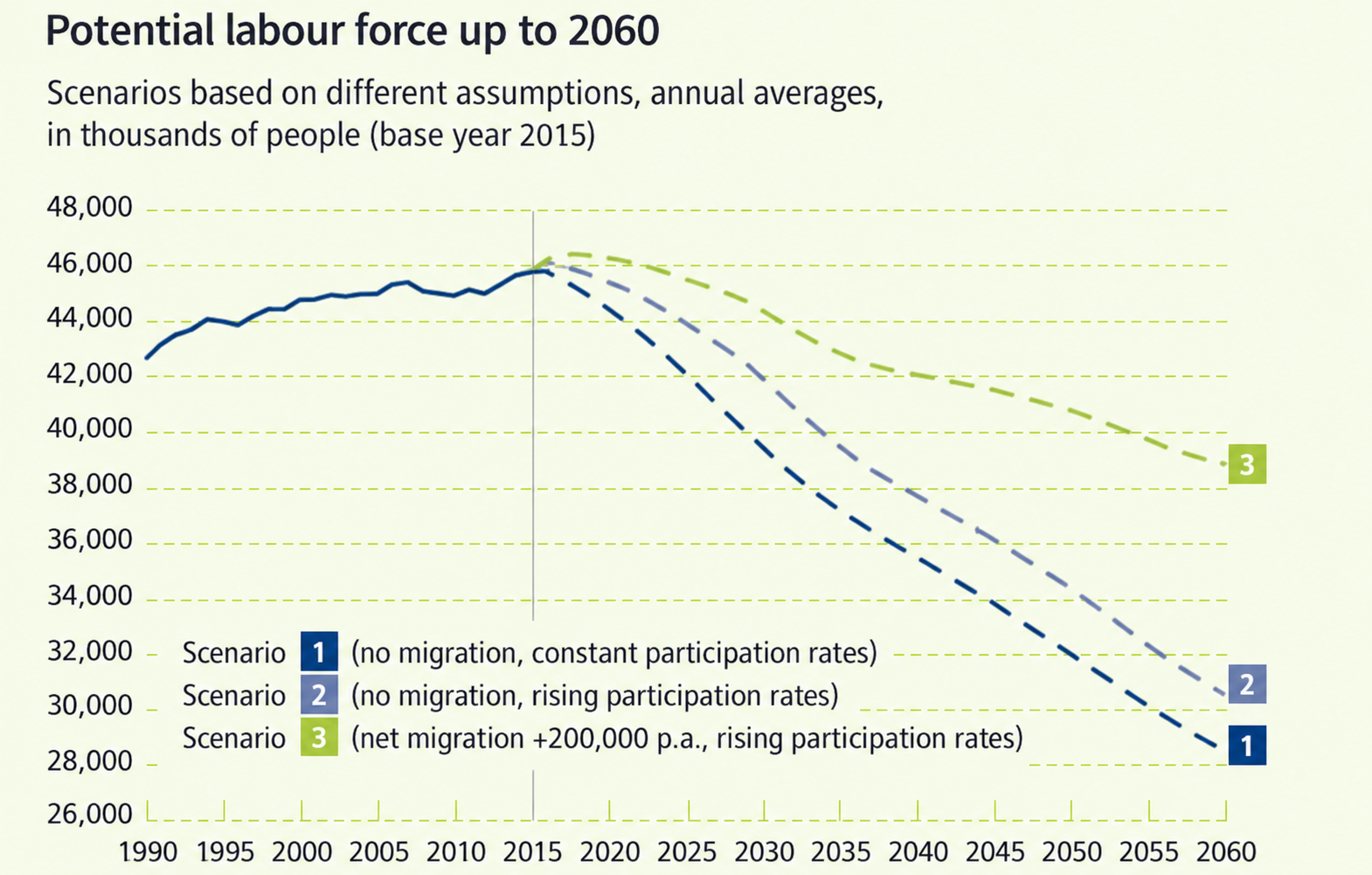
  • Changes in the population structure reduce the potential labour force. Rising participation among women and older people, together with migration, mitigate the demographic effect but cannot offset it completely (slide 6).
  • This can also cause bottlenecks at requirement level IV, experts, because graduate employment is concentrated in middle age groups that will leave working life over the coming decades.
  • Engineering occupations in machinery and plant engineering are also affected, as the age structure of graduate employees is no different from that in other sectors.

Economic causes

  • An economic downturn is often followed by lower hiring rates. This can subsequently reduce student numbers. When the economy recovers, bottlenecks arise because too few graduates are available to the labour market.
  • Shortages generally also manifest themselves in rising prices or wages. A demand shock occurs when an economic upswing suddenly increases demand for skilled workers.
  • Because wages do not adjust as quickly as economic conditions require, what could theoretically be a brief bottleneck can turn into a longer-lasting, cyclical skills shortage.

Scenarios for the potential labour force through 2060 under different assumptions; base year 2015.Potential labour force to 2060. Scenarios with different assumptions; annual averages in thousands of people, base year 2015. Scenario 1: no migration, constant participation rates. Scenario 2: no migration, rising participation rates. Scenario 3: net migration of +200,000 per year, rising participation rates. Source: IAB.
Risks and effects of a skills shortage

Effects on the labour market as a whole

  • Companies often respond to skills shortages by intensifying work and increasing automation to reduce their own staffing needs.
  • New sectors need skilled workers, some of whom are recruited from older industries, including machinery and plant engineering.
  • In both cases, insufficient availability of appropriately qualified workers distorts the labour market. Skills shortages also lead to the loss of jobs, or prevent the creation of jobs, that complement skilled roles.
  • Across the economy, unemployment may therefore rise as fewer lower-qualified employees are needed.

Barriers to innovation and investment

  • Through knowledge transfer, skilled workers have positive spillover effects on other employees. The resulting knowledge supports the development of companies and industries. If shortages prevent this transfer, growth and innovation decisions are also affected.
  • Insufficient capacity can lead companies to abandon new product launches. Alongside reduced growth opportunities, entire sites may be at risk in the medium term.
  • Without skilled workers, investments already made cannot be used properly.
  • Persistent shortages also discourage further investment in order to avoid innovation costs and losses caused by insufficient capacity.
  • Smaller companies are more severely affected.

Effects on competitiveness

  • A lack of skilled workers can prevent companies from fulfilling orders to the required extent. In the worst case, orders must be declined, resulting in lost market share to less affected businesses.
  • Existing economies of scale may no longer be available, and price competitiveness is lost.
  • Skills shortages reduce productivity.
  • A vicious circle can put jobs at risk and create further problems in production processes.
  • Ultimately, companies may also lose their ability to respond adequately to market changes.

Wage trends across the sector and among engineers

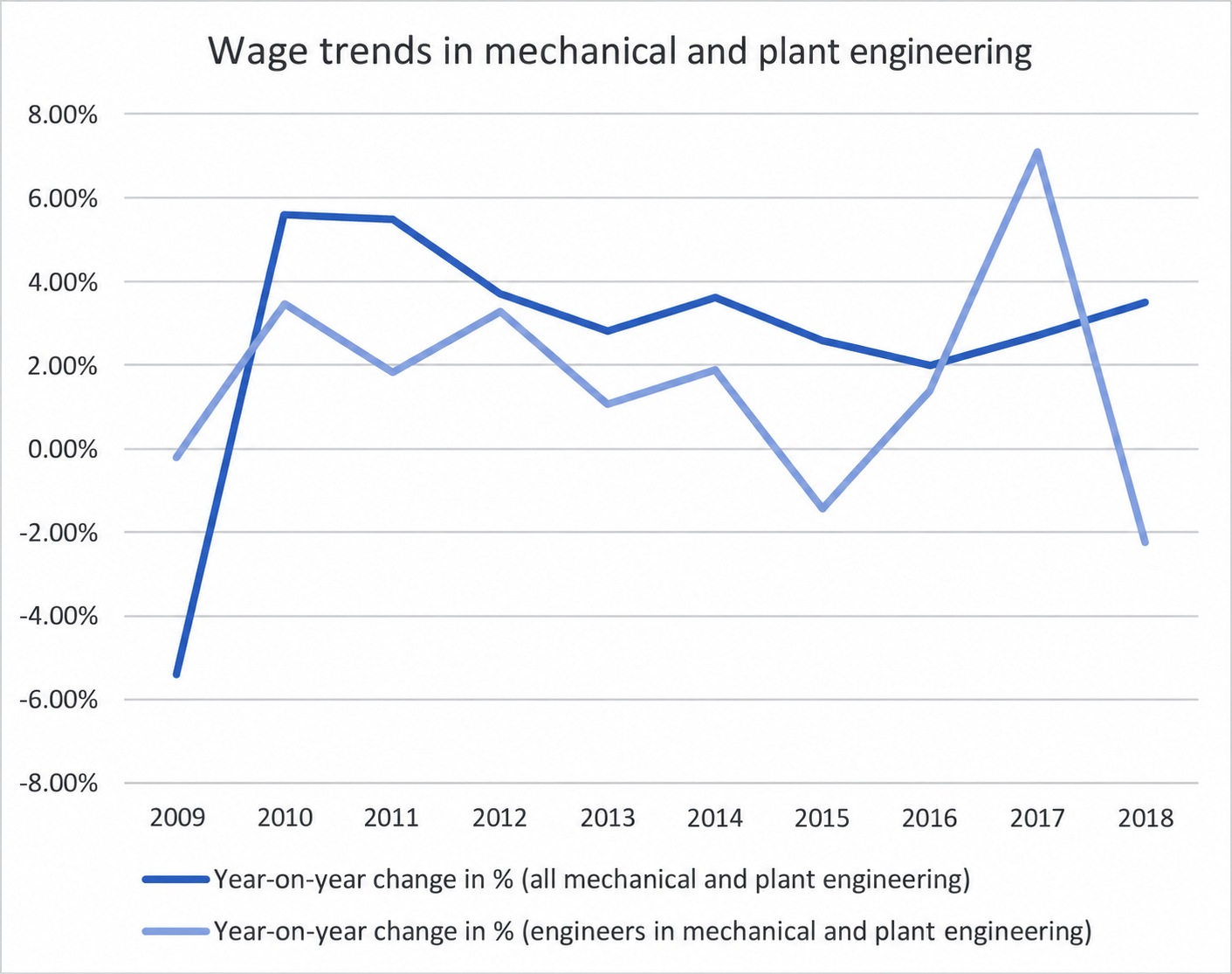
  • On the basis of wage trends, a shortage can be identified only if engineers’ wages rise faster than wages across the sector as a whole.
  • Despite the generally poor economic situation in 2008/2009, engineers’ wages fell only slightly. Experts remained in demand compared with lower-qualified employees.
  • Between 2011 and 2015, wages across the sector rose faster than engineers’ wages. These years therefore do not indicate a shortage.
  • In 2015, engineers’ wages fell while the sector as a whole recorded an increase of 2.6%. Wage trends do not reveal an engineering shortage.
  • In 2017, wage growth of 7.1% suggests increased demand for engineers. By comparison, wages across the sector rose by only 2.7%.

Last year, engineers’ average gross wages fell by 2.2%, while the sector as a whole recorded an increase of 3.5%.

On the basis of wage trends, no current shortage can be identified in engineering occupations.

Annual wage changes in mechanical and plant engineering compared with the previous year.Wage trends in machinery and plant engineering, 2009–2018. Dark blue: year-on-year percentage change across the entire machinery and plant engineering sector. Light blue: year-on-year percentage change for engineers in machinery and plant engineering.
The skills situation from companies’ perspective

The current skills situation and potential risks as seen by HR managers

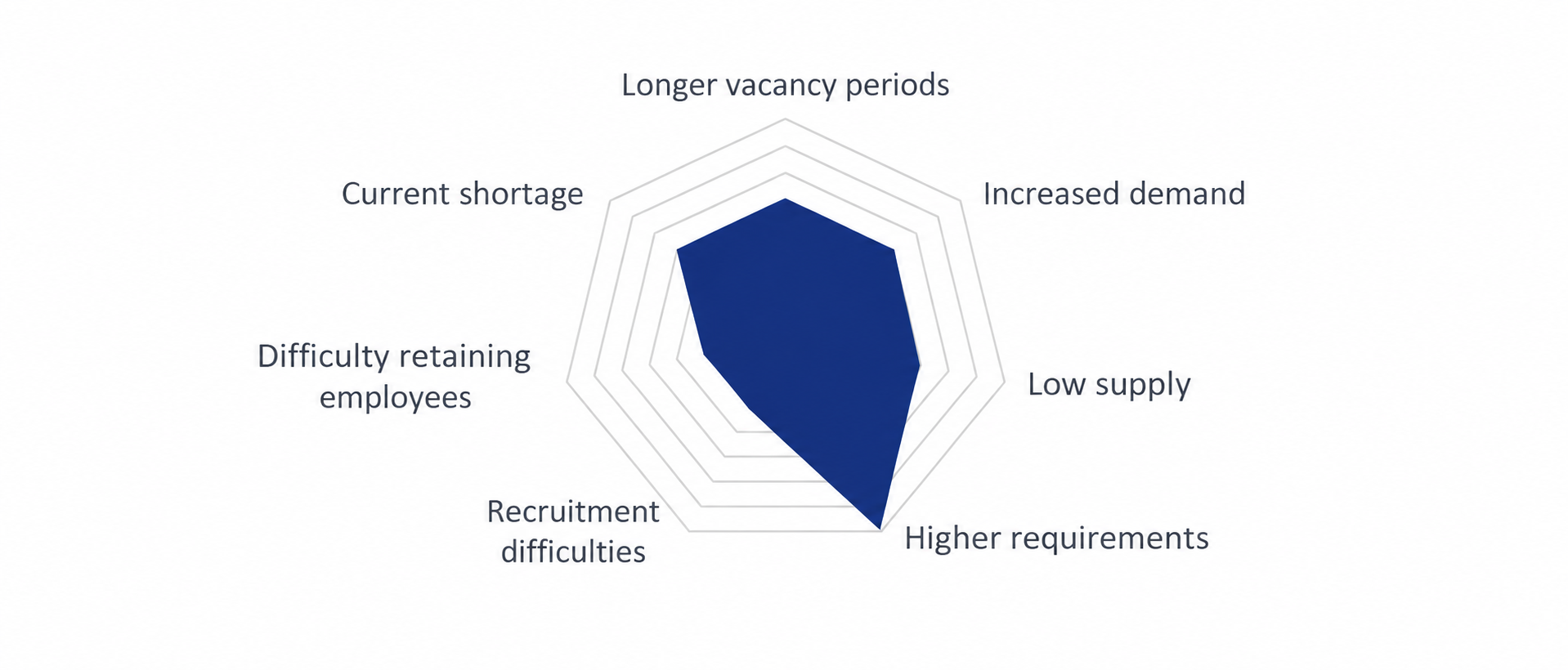
  • Five of the eight companies surveyed reported comparatively long vacancy periods. The time needed to fill positions is increasing particularly in IT and electrical engineering.
  • Increased demand is especially evident in IT. Demand for engineers is largely unchanged; instead, higher employee turnover is leaving positions vacant.
  • Insufficient labour market supply is reported particularly for experienced skilled workers.
  • All companies surveyed said they were placing greater demands on IT specialists and engineers.
  • General difficulties with recruitment and employee retention are rarely reported.
  • Overall, five of the eight companies said they currently faced a bottleneck involving engineers and IT specialists.
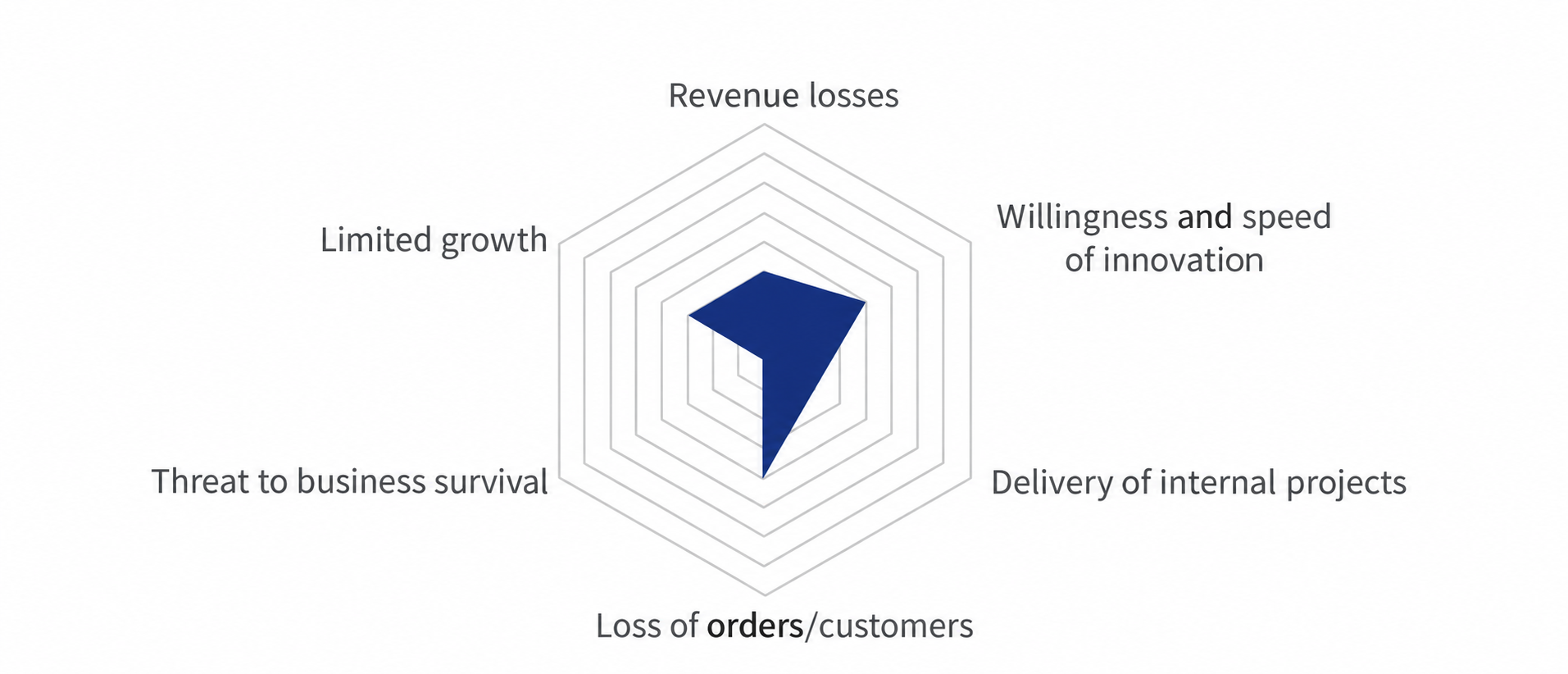
  • Overall, the risks of a skills shortage are considered limited.
  • The main concerns are potential loss of orders or customers and reduced scope for innovation.
  • Most companies do not expect substantial revenue losses, however.
  • None of the companies surveyed considers a skills shortage a threat to its continued existence.

Skilled labour situation: vacancies, rising demand, limited supply, and difficulties with recruitment and retention.Current skills situation. Radar chart labels, clockwise from the top: longer vacancy periods; increased demand; low supply; higher requirements; recruitment problems; difficulties retaining employees; current bottleneck.Risks of skilled labour shortages for revenue, growth, innovation and delivery of company projects.Potential risks. Radar chart labels, clockwise from the top: revenue losses; willingness and speed of innovation; implementation of internal projects; loss of orders or customers; threat to continued existence; limits to growth.

Recruitment difficulties

  • A company’s location and profile are particular reasons for receiving too few applications and being unable to fill vacancies promptly. Smaller and medium-sized businesses are most affected.
  • Skilled workers’ limited willingness to relocate or travel also prevents positions from being filled with suitable employees.
  • Insufficient applicant qualifications are reported comparatively less often.

Recruitment channels used

Online job platforms such as Xing and StepStone are the main channels used to reach the skilled workers required.

In some cases, companies use active sourcing to approach engineers and IT specialists directly.

Recruitment consultants are mainly used as an additional resource.

In rare cases, companies also try to find suitable employees through their existing staff’s networks.

Cooperation with universities is used to recruit new talent.

Companies generally regard the employment agency’s services as an option, but in most cases consider them unsuitable for recruiting highly qualified employees.
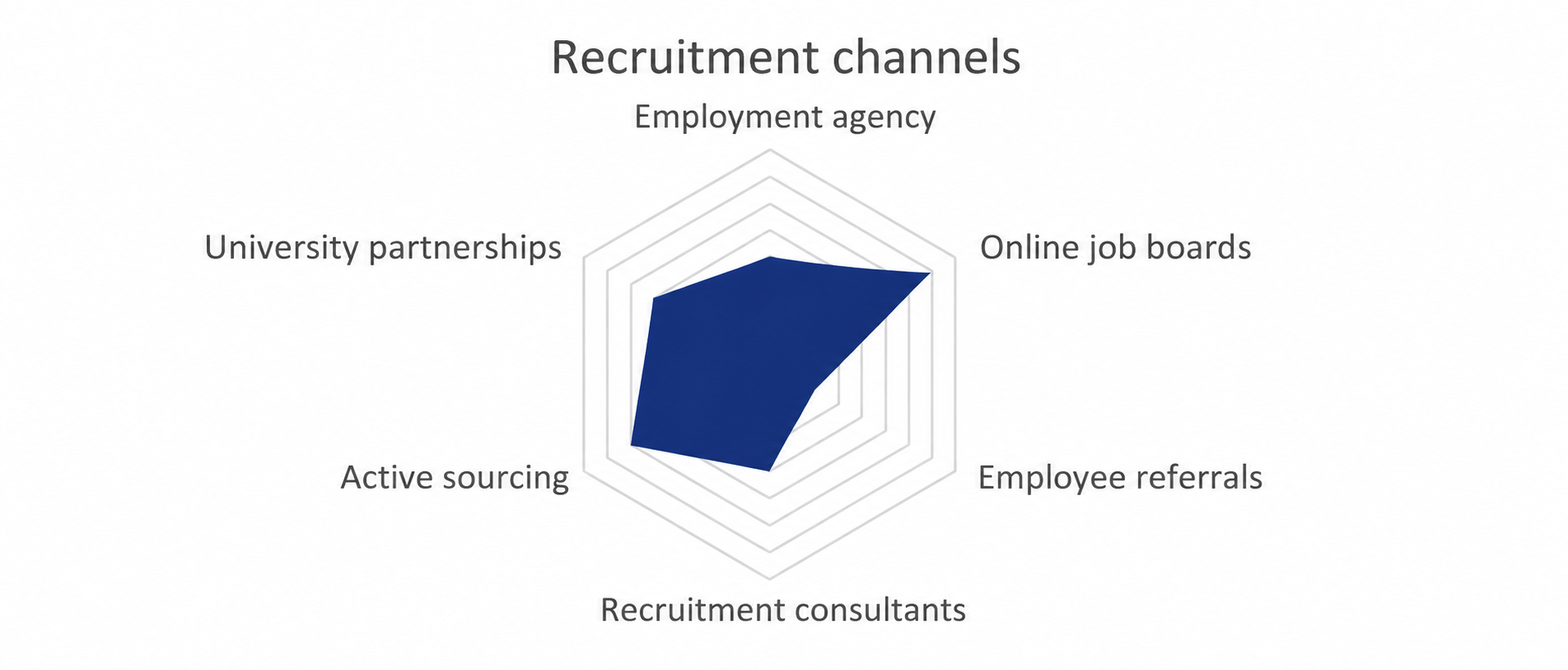
Comparison of recruitment channels: employment agencies, universities, online job boards, active sourcing, referrals and recruitment consultants.Recruitment channels. Radar chart labels, clockwise from the top: employment agency; online job platforms; employee referrals; recruitment consultants; active sourcing; cooperation with universities.
Measures to avoid and manage bottlenecks

  • When bottlenecks occur, the companies surveyed outsource parts of their orders to subcontractors or use external service providers.
  • Short-term bottlenecks are also addressed through overtime. However, overtime can be used only to a limited extent because of its impact on employees.
  • One company reported that it lacked the capacity to accept additional orders.

Approaches to preventing bottlenecks

  • Employee training and development are seen as central to meeting rising qualification requirements.
  • Companies continuously improve recruitment to meet their skills needs. This includes creating new departments in which in-house recruiters approach the required specialists and monitor the labour market.
  • Cooperation with universities and other companies also specifically aims to prevent bottlenecks.
  • Information events, including trade fairs, open days and conferences, are intended to raise awareness and promote the company.

Future labour market developments as seen by HR managers

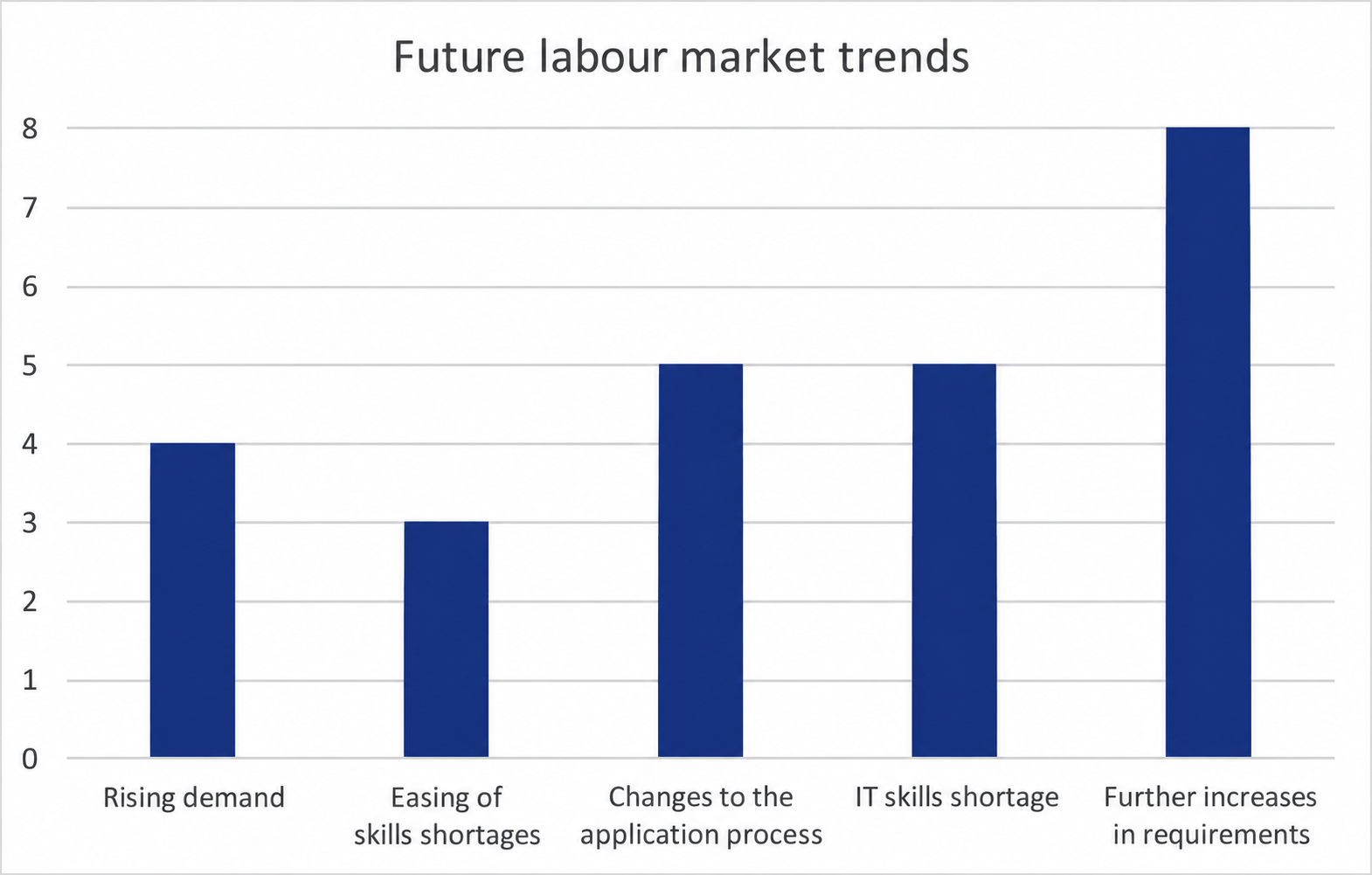
  • Overall, expectations are that demands on engineers and IT specialists will continue to rise. Faster technological development makes the ability to learn new topics and fields of work independently particularly important.
  • Bottlenecks are expected especially in IT. The challenge is to equip engineers broadly with IT knowledge to ease the situation. Interdisciplinary IT and engineering skills will play a decisive role in the future.
  • Most respondents expect the labour market to move from an employer’s to an applicant’s market. Recruitment measures must be adapted accordingly.
  • Only a few companies expect labour market conditions and the skills situation to ease.
  • Half of the companies surveyed expect growing future demand for highly qualified employees such as IT specialists and engineers.

Expectations for labour market developments, demand for skilled workers and changes in recruitment processes.Future labour market developments. Number of responses, left to right: rising demand, 4; easing of the skills situation, 3; changes in the labour market, 5; IT-sector bottlenecks, 5; requirements continuing to rise, 8.

Recommendations for securing skilled employees

Analyse the company’s specific challenges

Securing skilled employees depends heavily on the individual company. Its strengths and weaknesses should therefore be identified before action is taken. Analysing awareness, image, location, and the location’s advantages and disadvantages allows recruitment strategies to be tailored and improves their chances of success.

Salaries and wages

Hard factors such as salaries and wages remain the most important consideration when choosing an employer. Pay levels should therefore be monitored continuously and adjusted early according to requirement level to secure skilled employees.

Long-term workforce planning

Skills shortages often result from short-sighted workforce planning. To meet demand over the long term, companies need to know as early as possible how many new skilled employees they will require. Analysing the existing workforce can reveal which employees will leave, for example through retirement, and whether those remaining can handle the workload. In principle, the earlier demand is known, the sooner recruitment can begin and a bottleneck can be prevented.

Benefits, employer attractiveness and employee retention

Alongside salaries and wages, employees increasingly consider additional employer benefits, which can be decisive when choosing a company. Benefits such as occupational pensions, capital-forming payments, bonuses or performance awards increase employer attractiveness. These can be combined with leisure activities to strengthen cohesion and employees’ connection to the company. Employees should also receive a high level of appreciation and understand the purpose of their work, for example through regular conversations with managers.

Building networks

Building external networks and strengthening existing ones helps prevent bottlenecks. Cooperation with universities can provide a basis for finding suitable young talent. Relationships with former interns, and therefore potential employees, should be maintained, with offers where appropriate, for example collaborative bachelor’s or master’s theses as part of talent relationship management. Trade fairs, conferences and information events can also raise the company’s profile and attract potential employees. Cooperation with service providers and companies in the same sector can help bridge an existing bottleneck.

Recruitment channels and adapting the recruitment process

As many channels as possible should be used to advertise vacancies. Company profiles on common online job platforms and social media should be maintained and kept up to date. Dedicated recruitment departments can approach candidates directly and recruit experienced specialists. If internal capacity is insufficient, external recruitment consultants are recommended. If a candidate does not match a vacancy perfectly but has the potential to take on the role in future, the company should make an appropriate offer and support them through induction and further training. Recruitment measures can be improved continuously, including by observing recruitment practices across the market and adapting the company’s strategy. Where appropriate, the international labour market can also be considered, and the potential of migration developed through training and similar measures.

Developing and training existing employees

Ongoing technological progress can be used effectively only if skilled employees understand and can apply new technologies. Further training is the foundation for this. Employees should therefore have access to a broad range of development opportunities. This keeps options open for the future and enables companies to respond to market changes.

Sources: Federal Employment Agency, VDMA, DTO Research, Brenke, Eichhorst & Thode, IAB, Kettner, BMWi (2016–2017), Statista, DTO interviews, VDI