Labour market & talent
Understand talent availability, target groups, expectations and relevant employer competitors.


DTO · EN
DTO makes visible which factors attract talent, retain employees and enable change. To do this, we combine labour-market data with employee, candidate and leadership perspectives—as a robust foundation for EVP, culture development and effective people decisions.
Understand talent availability, target groups, expectations and relevant employer competitors.
Compare internal and external perceptions and develop a credible, differentiated position.
Make lived culture, areas of tension, leadership experience and desired development visible.
Prioritise the drivers of satisfaction, willingness to leave and acceptance of change.
Market Intelligence & Decision Model
For HR decisions, DTO MIND applies the logic of integrated market intelligence to labour-market, employee, candidate and leadership perspectives. Internal experience and external market conditions are brought together to create a shared picture for decision-making.
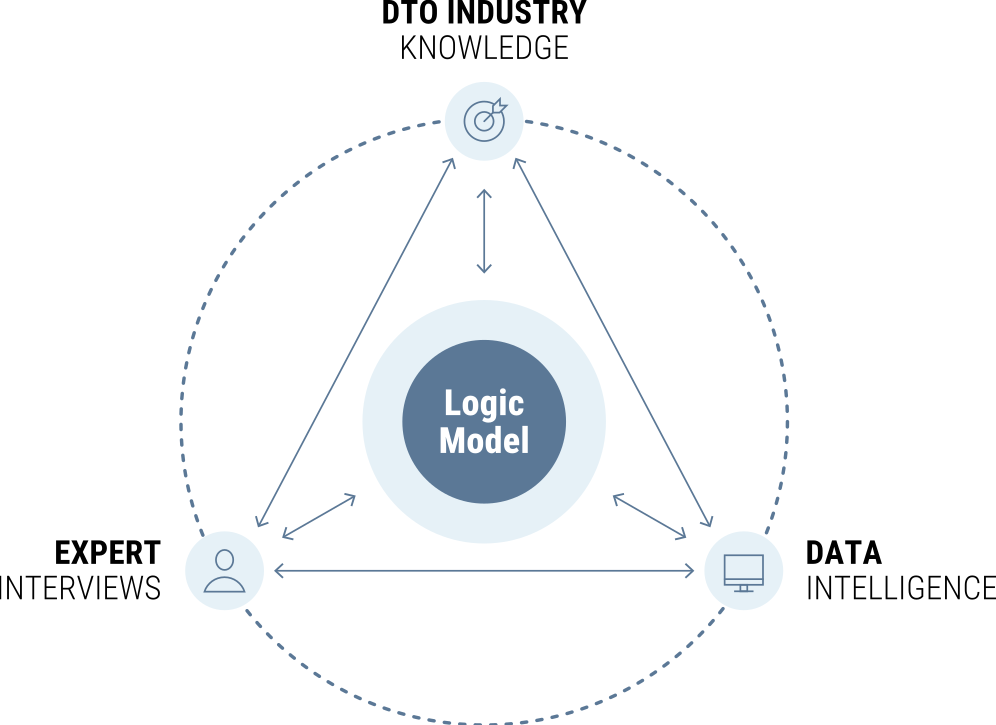
Labour-market, company, benchmark and internal HR data are combined by target group, location and function to create a robust starting point.
Interviews and surveys with employees, candidates, managers and other stakeholders explain expectations, reasons for changing jobs and areas of cultural tension.
DTO benchmarks, project experience and HR market knowledge help prioritise drivers and translate them into concrete measures for EVP, culture, leadership and retention.
Internal experience and the external labour market are brought together to create a shared basis for decision-making.
Typical services and deliverables:
Prioritised drivers of attractiveness, satisfaction and willingness to leave by target group.
Credible employer strengths, differentiation and relevant communication themes.
Segmented results, driver analyses and concrete areas for development.
Talent availability, employer offerings, benchmarks and regional characteristics.
The internal employee experience is connected with candidate expectations and labour-market conditions.
Skilled workers, management, locations, functions and career stages are examined separately.
Results are translated into prioritised actions for HR, leadership and communication.
Observation, interpretation and recommendation remain methodologically distinct.
HR Market Intelligence combines labour-market, competitor, employee and candidate intelligence into a sound basis for employer and people decisions. DTO brings together quantitative analyses, qualitative perspectives and organisational context.
DTO aligns the questions in an employee survey with the specific decision and analyses the results by target group, driver and prioritised field of action. This enables concrete measures to be derived instead of merely descriptive findings.
Yes. DTO compares internal experiences with candidate expectations, competitor offerings and regional labour-market conditions, creating a shared basis for decision-making.
DTO supports decisions relating to EVP, employer positioning, culture development, employee retention, change communication and the prioritisation of HR measures.
DTO combines internal employee experiences with candidate expectations, employer competition and regional labour-market conditions to create a shared basis for decision-making.
DTO can investigate skilled workers, candidates, employees, managers, locations, functions and career stages separately and compare them.
When developing an EVP, DTO compares internal and external perceptions, identifies credible employer strengths and prioritises relevant areas for differentiation and communication.
Yes. DTO can segment results by location, function, target group, management level or career stage, provided the research design supports a robust analysis.
DTO brings together labour-market, company and benchmark data with internal survey or HR data to create a robust starting point.
Yes. DTO investigates lived culture, leadership experience, areas of tension and desired developments using quantitative and qualitative methods.
DTO prioritises the most important drivers and differences, translating them into actionable measures for HR, leadership, communication, culture and employee retention.