DTO · EN

DTO · EN
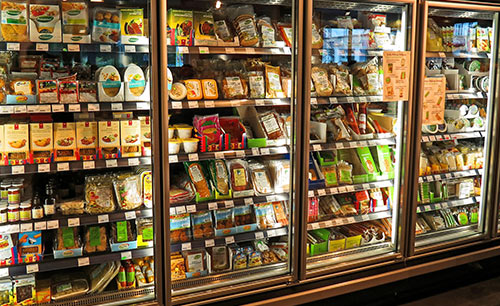
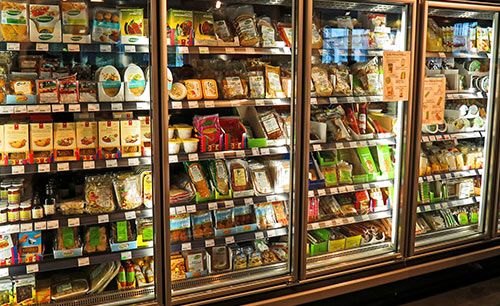
The whole household is occupied by consumer goods ordered online. The whole household? Not quite. One room, ruled by stubborn dinosaurs, continues to resist e-commerce: the kitchen, or more precisely the refrigerator — itself also ordered online. Even today, consumers still buy most of its contents in physical stores.
According to current reporting, online food sales account for less than 1% of revenue at many major grocery retailers, including the Schwarz Group, which owns Lidl, Rewe and neighbouring Switzerland’s Migros. Rare exceptions such as the Dutch-Belgian Ahold Delhaize Group reach around 2.5%. Compare this with the scale usually seen in e-commerce: in the last financial year, Amazon’s international revenue amounted to around 45% of that of Walmart, the world’s largest grocery retailer by revenue. How can this be? The enjoyment of shopping? That can apparently be experienced online too; Zalando supposedly makes its customers scream with excitement. Concerns about shelf life? Even medicines requiring refrigeration are now delivered to patients’ homes.
Part of the answer is infrastructure.
Remember the bofrost delivery vans? They are insulated because frozen goods must be protected from external temperatures at least until they reach the doorstep — continuously, 24/7 at −22°C or below, from production to consumer. The situation is similar for chilled goods, including almost all dairy products, meat and fruit. These require less energy to transport but have much shorter shelf lives because they have not been blast-frozen. Production sites and consumers therefore tend to be geographically close.
Logistics is comparatively straightforward for flour, sugar and canned goods. Food stored at ambient temperature has a long shelf life and can be transported from A to B without great effort. Things become interesting with drinks in returnable containers, such as beer. Empty bottles and crates must find their way back to production. Beer crates, at least, stack very securely: even when full, up to 15 can be stacked without shelving.
Four completely different logistics infrastructures converge between production and consumers. The foods remain physically separated in the largest possible units until the final order is assembled. In a supermarket, consumers do this themselves, for example by taking an item from a freezer. An online order, however, demands more from warehouse operations:
Such a warehouse must therefore be highly flexible and close to customers: more likely in a metropolitan area than in the countryside, and smaller rather than larger. The smaller the warehouse, the greater the need for large buffer warehouses nearby. Consider this calculation: if a grocery e-commerce warehouse fulfils the same function as a supermarket — bringing together the assortment and assembling orders — and costs around €80 million, as at Rewe in Cologne, while building a supermarket costs roughly €4 million, or about one twentieth as much, how many online orders are needed each year to make that warehouse worthwhile?
With an average of just under 1,000 customers per supermarket per day, or around 300,000 per year excluding Sundays and public holidays, the answer is about six million orders a year. That is roughly one twentieth of all Zalando orders in 2018. Zalando had ten years to reach its scale and now serves a radius of up to 2,000 kilometres. Clearing this hurdle is a Herculean task. And in a hurdles race, at least nine more usually follow. Let us see who delivers a vegan steak to my home first: Aldi at the click of a mouse, or a protein printer…