DTO · EN

DTO · EN
In France, hydrogen has been produced for over 70 years in the chemical, refining, electronics, and glass industries. However, the challenge now, both nationally and worldwide, is to produce hydrogen with zero CO² emissions. This 'green' hydrogen, produced by electrolysis, a process that uses electricity to extract hydrogen from the water molecule, could be the sustainable energy of the future. But what are we actually talking about? What are the limits to decarbonization, and what are France's strengths in this area?
Halving emissions from industry over the next ten years and achieving zero net emissions by 2050: this is the ambitious target for the industrial sector announced by the French President in November 2022. France has been developing this technology since 2017, and in 2018 it drew up its first hydrogen plan, followed by a national strategy for low-carbon hydrogen in 2020. It is now at the forefront in terms of R&D and patents. It is above all through the France 2030 investment plan that it is reaffirming its positions by announcing a budget of €9 billion aimed at developing the industrial offer for low-carbon hydrogen. This plan will enable the construction and manufacture of
It's a challenge for France, which has a technical lead over the rest of the world in this technology, and now needs to step up the pace if it is to remain competitive.
Although various 'green' hydrogen projects are currently being developed in France, it is above all thanks to its nuclear power plants that France has a real advantage in becoming a leader in carbon-free hydrogen. However, despite France's move to classify nuclear-generated hydrogen, also known as "pink hydrogen", as "green hydrogen", other European countries are taking the more restrictive view that it should only come from renewable sources such as wind, solar, or hydropower. The challenge of considering nuclear power as a viable, low-carbon source could enable France to produce energy in a low-carbon, cost-effective way, and above all to meet its targets for the development of sustainable energies.
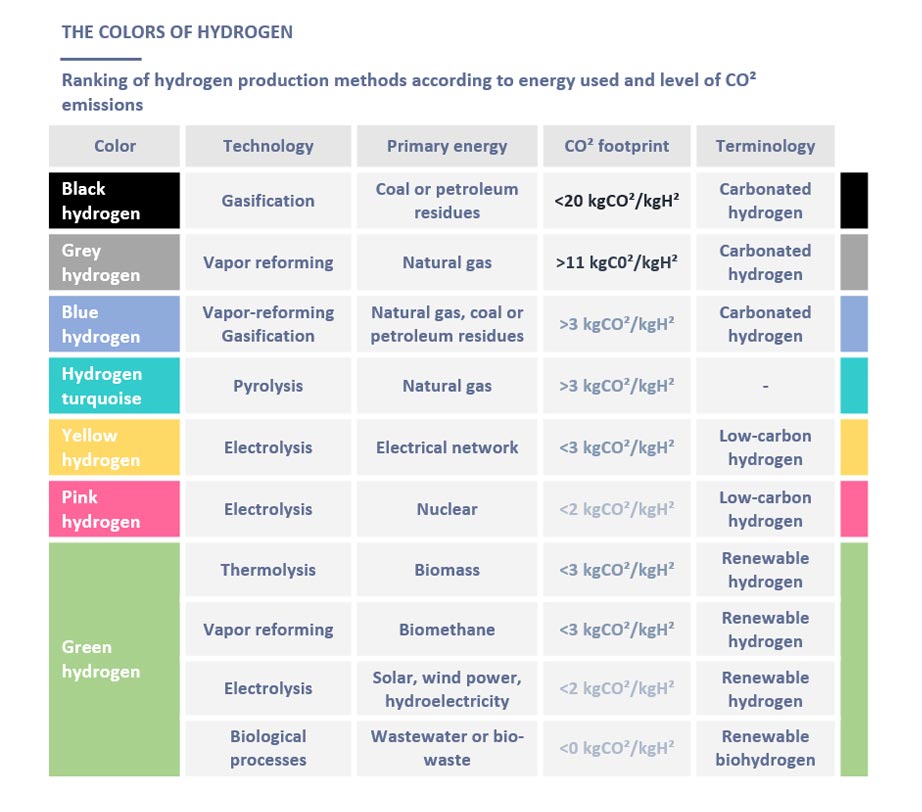
This is not without its pitfalls, as there is also the question of the price of green hydrogen, which is in the region of €4 to €6/kg, unlike grey hydrogen, which costs between €1.5 and €2.5/kg to buy for large-volume industrial consumers. As for accessibility, green hydrogen still only accounts for 5% of national production, with just sixty or so hydrogen service stations compared with 11,000 petrol stations. For all these reasons, we need to invest in this nascent sector, to ensure that hydrogen is sustainable, economical, and accessible in the long term.
To achieve this, France is relying heavily on its pilot projects and positioning the French offering in different markets.
By deploying these projects, based on the French electricity grid and supporting the recovery of biomass and waste, France will be able to meet its commitment to a low-carbon and sustainable France. With this, France would be an essential pillar of a zero-emission Europe. It's a daring gamble, but an interesting challenge for the industries of today and tomorrow.
Text written by Maria-Belen Kerbsties