DTO · EN

DTO · EN
In December last year, we reported on up-and-coming hydrogen trends. Half a year has passed by since then and although development is slower as most may like, we think the topic is so important that it is time for a brief update.
What developments are currently considered realistic? What are the chances that hydrogen in general or hydrogen as a starting point for e-fuels will be increasingly used?We would like to tackle this question in a short market check, while going into the potential of different application areas.
First: One thing has definitely not changed in the past months, namely the original matter of hydrogen. If it is not produced by renewable energy sources, its implementation in larger quantities is quite pointless because a considerable amount of energy is needed to produce hydrogen. And exactly this issue, concerning the production of expensive gas, is still the central problem. Only by expanding the use of renewable energies is it possible to produce hydrogen from surplus energy at lower costs. At the moment, this is done primarily with wind power, hydroelectric power or photovoltaic power. However, it is also possible to produce hydrogen from natural gas or biomass. Nonetheless, even more unusual methods are currently being researched. Researchers at the University of Kiel have now found a method of producing green hydrogen using bacteria via photosynthesis. This being said, it will take some time before this technology is market-ready.
The two major subject areas of alternative energy sources and hydrogen are therefore directly related to each other and the expansion of alternative energies acts as an accelerator for the production of hydrogen. At present, a number of emerging factors indicate that hydrogen production will become an increasingly important topic. Political decisions on future energy production and climate neutrality, as well as European subsidy programs that subsidize energy companies if they offer CO2-neutral electricity, act as strong market drivers for the relevant institutions to continue investing in green energy. At the same time, the expansion of hydrogen infrastructure is also being supported with aid and funding packages. Some countries are currently or will soon be investing in hydrogen infrastructure (while at the same time expanding alternative energy concepts), which will boost the global demand for hydrogen. The Gulf States, for example, are increasingly being forced to enter alternative business areas for oil production and are already investing heavily in the expansion of mega solar plants.
Summarily, for some obstacles that still exist, greater reductions in the production costs of hydrogen can be expected in the medium term (<10 years). This will ultimately increase hydrogen sales volume and promote alternative propulsion concepts mainly in industrial segments, as well as for off-highway vehicles, ships, and aerospace. A strong increase in hydrogen production volumes can already be observed. In Germany alone, the electrolysis capacity of power-to-gas plants in operation or in planning has increased tenfold within one year.
Even if hydrogen has so far been regarded as an overpriced luxury product that currently only serves niche markets, the global expansion of alternative energy sources will drive the full potential of this gas. Hydrogen will also play an important role as a storage medium for renewable energies.
How the exciting topic of "hydrogen" continues to develop will be discussed in further articles. The question of what effects China's current hydrogen focus will have should also be addressed. On May 29th, 2020, the National People's Congress adopted a nationwide economic and social development plan, which also deals with the development of industrial hydrogen use. In this context, effects on the passenger car sector should also be kept on the radar. We would be pleased to keep you informed on this topic.
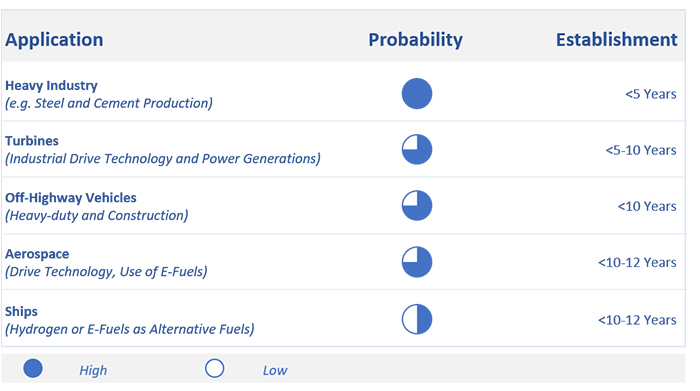 Source: content and illustration by DTO – B2B Research & Strategies
Source: Content and Presentation DTO - B2B Research & Strategies